


Lower-than-desired commodity prices and an uncertain global economic situation are just two of the challenges facing Orangeburg County farmers as the 2020 planting season kicks into gear.
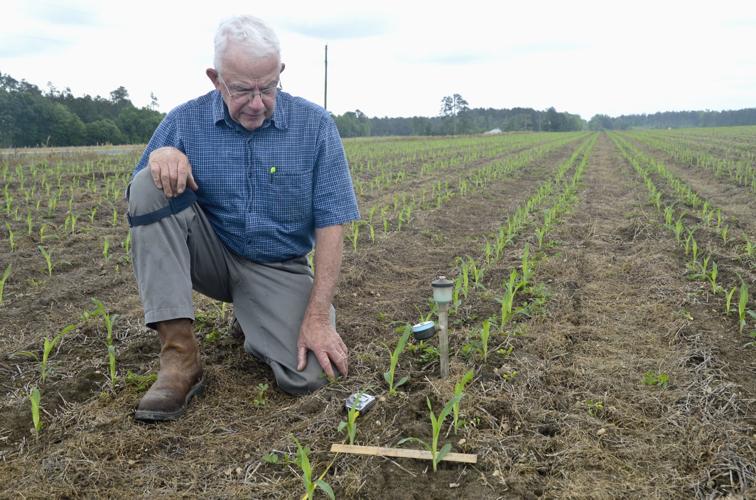
General uncertainty, while challenging, is making planting decisions relatively easy for growers like Cope farmer James Traywick.
"It is pretty much 'stick with what you got,'" Traywick said. "There is not a bright spot in the commodity picture. We are overproduced in everything and the world demand is weak. We are the only really good economy in the world, from what I gather."
Traywick plans to grow roughly 600 acres of cotton, 350 acres of corn and 300 acres of peanuts, which is consistent with 2019.
One concern in 2020 is the impact of the coronavirus and fears on the cotton market and prices.
People are also reading…
"We can hope the virus thing will blow over as it impacts cotton a good bit," he said. "If we have to reduce and cut trade with China, it will impact certain things."
China is a large importer of U.S. cotton, which comes back to the U.S. as clothing.
As far as food is concerned, Traywick does not expect an impact as most food consumed in the United States comes from either Mexico or is grown domestically.
Trade concerns also exist but Traywick believes trade issues will ease, putting less of a concern on the soybean market. China is a big soybean consumer, and trade disagreements between the two countries have resulted in retaliatory tariffs.
Experts believe China will come into the U.S. market for soybeans in late spring and summer after Beijing in January promised to buy more American farm goods as part of an interim trade deal.
"Commodity prices in general are a lot lower than we need at this point," Orangeburg County Clemson Extension Agent Jonathan Croft said. "It is almost impossible to pencil out a profit at the current prices."
If contending with commodity prices and the weather are not enough, Croft said farmers are also facing new regulations.
"Those that handle and apply paraquat-containing herbicides will have to complete a certification training in addition to being a private pesticide applicator," Croft said.
According to the Environmental Protection Agency, the reason for this new training requirement and other new restrictions is to help reduce accidental ingestion (a single sip can be fatal) and other exposures to the product.
Since 2000, 17 deaths have resulted from accidental ingestion of paraquat.
But in the short term, Traywick and other local farmers are just hoping things dry out a little bit before planting kicks into full gear in April.
"It (rains) could cut down on the amount of corn that is planted and that needs to be planted in April," Traywick said. The winter has been among the rainiest seen in the area in recent memory.
Forecasts for April and May continue to call for above-normal precipitation.
One of the challenges he will be facing come planting time is the 300 acres of cover crop in the form of radishes, clover and rye he still has in the field.
"It is going to get in the way at some point," he said.
In an attempt to make light of the situation, Traywick quoted an old proverb, "It will be wet until the sap rises."
The rainfall is a reversal of exceedingly dry summertime conditions farmers had to contend with in 2019. Dryland crops across the board were negatively impacted by the lack of rain.
While more detailed crop-planting projections will be available later in the spring as the U.S. Department of Agriculture’s National Agricultural Statistics Service contacts producers to determine their plans for the growing season, Croft provides his best estimate at what the county will see.
USDA survey results will be published in the Prospective Plantings and Quarterly Grain Stocks report.
Corn
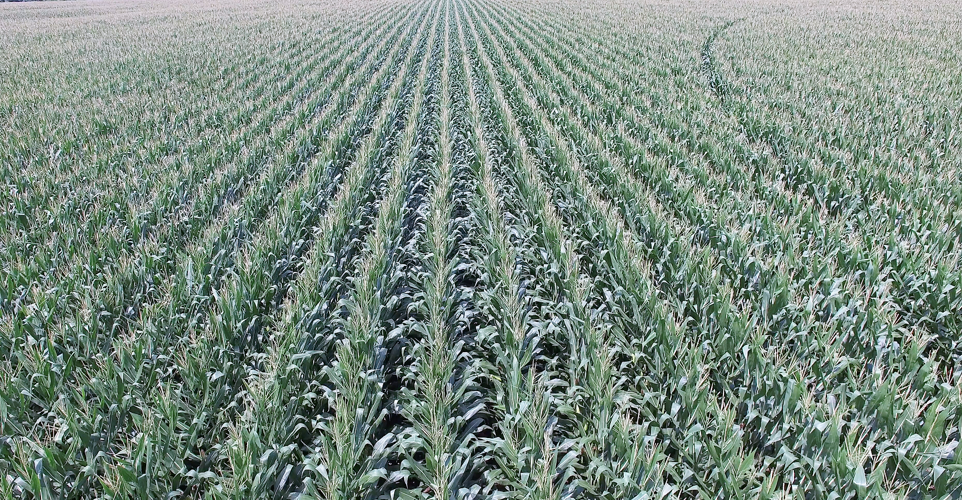
Croft anticipates 35,000 to 38,000 acres of corn being planted in the county for 2020, which would be up slightly from 2019, but he noted that is a projection.
"Price and how wet the ground stays in the early spring" will make or break this projection, he said.
Should weather normalize, the acreage could hold true, meaning a potential in increased yields.
About 31,300 acres of corn were planted in the county in 2019.
Agricultural economists say there is a potential bumper crop of corn that could drive down market prices even further while creating huge stockpiles that could take years to reduce.
Prices are already lower this time than last year, coming in with a base of about $3.95 a bushel. Corn prices in 2019 were hovering around $4 a bushel, well below the $5 to $5.50-per-bushel range.
Corn is the earliest crop planted in the county, typically in early April.
Cotton
About 35,000 acres of cotton are expected to be planted in Orangeburg County in 2020, which would be roughly the same as 2019, if not down a little bit. About 37,400 acres were planted of the crop in 2019.
The deciding factor of crop plantings, like corn, will be prices and weather.
Cotton prices are lower than this time last year, hovering below 70 cents. Last year, prices for the entire year hovered around 60 cents per pound.
Reports show cotton prices will be volatile, depending on acreage reports, crop conditions and weather but some cotton economists predict a season average cotton price of 63 cents per pound.
Farmers typically would would like to see prices over 80 cents a pound.
The price will make it crucial for farmers to get good yields to help cover costs. Should acreage be reduced, prices could see an increase.
International trade issues are also facing cotton farmers this year.
While U.S. exports to China have decreased, markets in Bangladesh, Vietnam, Pakistan and Turkey have grown.
But Brazil's market share also has increased, further depressing cotton prices.
Heading into 2020, cotton growers should also be aware of a new cotton disease called cotton blue disease. It is caused by the cotton leafroll dwarf virus, transmitted by cotton aphids. Symptoms can include dropping leaves, stunted plants and elongated main stems.
There are no fungicides or antibiotics to control the virus, and insecticides will not prevent aphids from establishing in fields.
Cotton is usually planted in early May. Cotton harvest begins in late September.
Peanuts
Croft anticipates farmers will plant about 10,000 acres of peanuts, which will remain stable from 2019. Peanut prices and crop rotation needs will be deciding factors on plantings, Croft said.
Peanut contract prices were hovering at about $430 per ton under contract heading into the spring. Last year, prices were about $435 to $450 a ton under contract. Farmers would like to see prices at least in the $500-per-ton range if not higher to help make a profit.
The lower profit margins resulted in a drop in peanut plantings in 2019. Peanut plantings in 2019 were in the 4,500-acre range for both runners and Virginia-type peanuts.
Soybeans
About 12,000 acres of soybeans are expected to be planted, which is slightly lower than the 13,400 acres in 2019.
"Prices are lower than 2019, and uncertainty in the market is not calling for an increase in acres," Croft said.
Croft said tariffs have caused some volatility in the market during a time of increased demand.
"African swine fever caused a reduction in swine population in China and now the coronavirus outbreak is also having a negative effect on demand for soybeans," he said.
Soybeans have been hovering in the $8.50-per-bushel range. Last year they were in the $9 range.
According to some soybean experts, growing earlier-maturing soybeans has also been a trend due to the intermediate growth habits of earlier crops as well as reducing the potential for harvest delays.
Experts do note the early crop can prove challenging as pod-set for early beans typically occurs during the high heat of the summer.
Soybeans typically are planted in May 10 to July 11 and harvested from Oct. 20 to Dec. 30.
Hemp
For the first time since it has been introduced to farmers in the state two years ago, there is no cap on permits for growing hemp in 2020 if state requirements are met. These requirements include such things as proof of South Carolina residency and a criminal background check.
Hemp has been grown in Orangeburg County and the region since 2018 as part of a state pilot research program for the crop.
About 10 hemp farmers in Orangeburg County have grown the crop and 14 in the entire T&D Region for its first two years.
Croft says some things have to happen before the crop catches the interest of more farmers.
"Hemp will only be a viable option for those that have a very secure relationship with the contracting individuals," he said. "There are a lot of growers still waiting to be paid for the 2019 crop."
Croft said he was unsure of how many acres of the crop will be planted in 2020, but "conversations with local growers from 2019 lead me to believe it will be significantly less this year."
Croft said there are several concerns from farmers about hemp.
"They are concerned over timing of payments, the fact that the market for CBD oil appears to be oversupplied, and then new testing rules that are still being worked out," Croft said.
At the Edisto Research and Education Center, Dr. Gilbert Miller said hemp research will continue as researchers will look at 10 varieties and two planting dates: May 11 and June 8.
"We will be looking for the combination of planting date and variety which will consistently stay below the allowable 0.3 total THC level," Miller said.
Last year, the REC looked at how six hemp varieties performed with four different planting dates: June 6, June 25, July 19 and Aug. 2.
"The Aug. 2 planting date was double-cropped following spring watermelons," Miller said.
Hemp is a variety of the cannabis sativa plant, but it has much lower levels of THC, which is the psychoactive chemical. The crop is tested before planting to make sure the THC levels are not to the point where it is classified as a regulated drug.
According to their website, the plant's "THC levels determine whether the substance is considered an agricultural product or a regulated drug."
This year, SCDA inspectors will go out to every field where hemp is grown and test the crop to make sure it is within legal limits. If given the green light, the farmer will be able to harvest it within 15 days of the test and sell the crop.
Hemp has many potential uses: clothes, food, paper, CBD, cosmetics and even industrial fiber.
Contact the writer: gzaleski@timesanddemocrat.com or 803-533-5551. Check out Zaleski on Twitter at @ZaleskiTD.

Gene Zaleski
T&D Staff Writer


