


Fruit and vegetable growers in The T&D Region will have several new regulations and laws to contend with this year when trying to grow their produce.
Trade agreements, trucking regulations, temporary worker programs and new standards for growing, harvesting and packing will tag-team produce farmers, according to fruit and vegetable specialists.
The North American Free Trade Agreement is gone and is being replaced by the United States, Mexico, Canada Agreement (USMCA), which goes into full effect this year. Canada is in the process of signing the agreement.
"The trade deal may be considered an overall positive for U.S. agriculture but not so positive for some areas," said Dr. Gilbert Miller, Clemson Extension area vegetable specialist. "Unfortunately, the Southeast fruit and vegetable industry could see a dramatic increase in Mexican fruit and vegetable imports during our prime market season."
People are also reading…
There also some changes to the hours of service of transport providers.
The changes allow additional operational flexibility to truckers by giving drivers more discretion on how to use on- and off-duty hours. The flexibility is seen as important for truck drivers delivering perishable commodities.
Fruit growers generally see the changes as less rigid and more balanced, without jeopardizing safety of produce.
"Cost of shipping produce will continue to increase (under the new rules)," Miller said.
The increased demand for temporary workers provided by the H-2A program will also be a story in 2020.
The H-2A program allows employers to hire foreign workers on a temporary basis to fill positions for agricultural work for which domestic labor cannot be found.
"The demand will probably exceed the availability in 2020," Miller said.
The challenge in 2020 will be that the use of temporary workers provided by the H-2A program has increased significantly throughout the Southeast.
Commercial Horticulture Clemson Extension Agent Eulalio Toledo said another issue facing fruit and vegetable growers will make it more challenging for medium to large growers to sell their produce.
The Food Safety Modernization Act-Produce Safety Rule will impact farms where food sales are greater than $500,000 annually over the last three years and sales to qualified end-users exceed sales to others during the same period.
Farms following below these markers would be partially exempt from the rule.
The Produce Safety Rule establishes, for the first time, science-based minimum standards for the safe growing, harvesting, packing and holding of fruits and vegetables grown for human consumption. The rule comes from the U.S. Food and Drug Administration.
Despite the challenges, there are plans to grow fruits and vegetables in the region in 2020.
Watermelons
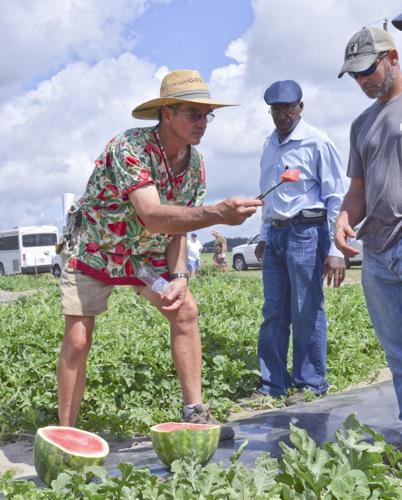
Miller said estimates around 3,000 acres of watermelons will be grown in The T&D Region.
"Due to very wet conditions, most growers have not been able to prepare their fields and apply plastic mulch and drip," he said. "If the wet weather lingers much longer, you might see a decrease in acreage."
As happens every year, the Edisto Research and Education Center's new watermelon varieties are being grown as well as "potentially soil environment enhancing products," Miller said.
Cantaloupes
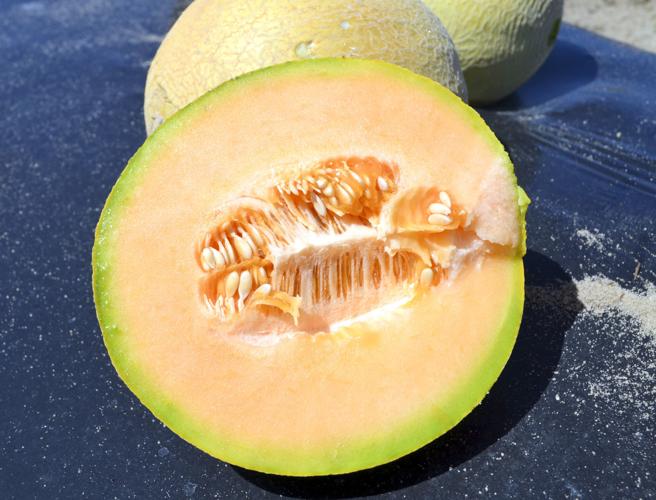
Cantaloupes are continuing to decline in the region, with plantings estimated to be below 1,000 acres in 2020. This continues a trend from 2019.
"Consumers are buying fewer cantaloupes," Miller said, noting the demand seems to be shifting more to watermelons.
Continued wet conditions into early March will put a dent in plantings, combined with the existing low demand, he said.
"We are looking at some long shelf-life cantaloupes and other interesting varieties," Miller said, referring to the work going on at the REC.
Cucumbers, squash
Cucumbers and squash plantings are expected to be stable from 2019, with about 250 acres of each grown in both the spring and the fall, Miller said.
Mother Nature will be the driving factor on how much is planted, but market conditions -- including the impact of increased seasonal imports -- could also be a planting trigger.
Sweet potatoes
An estimated 500-plus acres are expected to be planted of the crop with an expected increase for the processing market and stability in the fresh market.
Miller said the key for 2020 sweet potato production will be the ability of processing facilities to handle increased production of sweet potatoes for processing.
The year will see the release of two new sweet potato varieties developed by the U.S. Department of Agriculture in Charleston.
"We are looking at drip irrigation under sweet potatoes and the use of fertigation" (nutrients injected through drip tape), Miller said.
Greens and sweet corn
Well over 800 acres are in line to be planted with greens and about 150 acres are expected to be planted with sweet corn in Orangeburg County, with market and growing expenses the two determining factors on planting decisions, Toledo said.
Last year, about 1,200 acres were planted of greens and 120 acres were planted in sweet corn.
Strawberries and blueberries
Toledo estimates about 70 acres of strawberries and 45 acres of blueberries are projected to be planted. The availability of labor and the prevalence of disease issues will determine the success of the crop, and with blueberries, the double whammy of diseases and insect pressure will also be a factor.
Last year, about 55 acres of strawberries and 40 acres of blueberries were planted in Orangeburg County alone.
Peaches
Clemson Extension Commercial Horticulture Agent Sarah Scott said the success or lack thereof of peaches will depend on weather. She said it is too early to tell how the crop will fair.
"Weather heavily impacts the peach crop, be it temperatures, rainfall or other events," she said. "At this point in the season, we still have some time before we are out of the woods as far as potential cold weather but growers are operating on their normal schedules when it comes to pruning and management in hopes for a good crop this season.
"The key to a successful peach crop this year will be an alignment of good weather and good working conditions, and only time can tell if that will happen," Scott said.
Contact the writer: gzaleski@timesanddemocrat.com or 803-533-5551. Check out Zaleski on Twitter at @ZaleskiTD.

Gene Zaleski
T&D Staff Writer


