


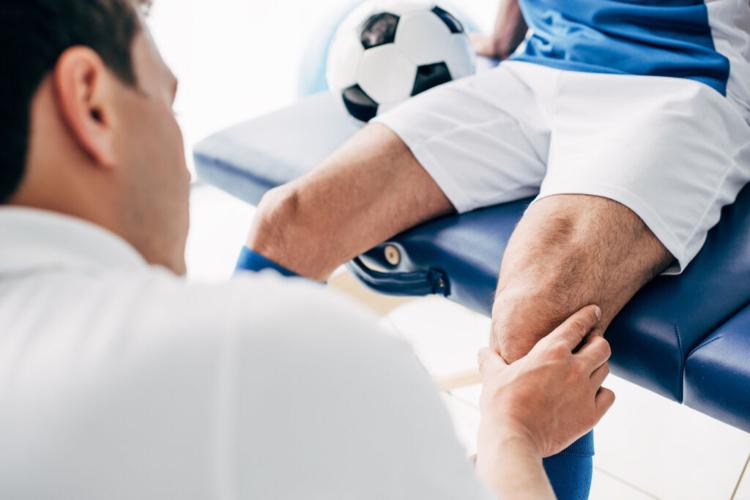

Sports injuries are a common concern for student-athletes, parents, and coaches. While some soreness and bruising can be treated at home, other injuries require further evaluation to prevent them from becoming more serious.
Gianna Michelini, an athletic trainer with McLeod Sports Medicine, explains when athletes should seek help, which symptoms should never be ignored, and how concussion protocols and athletic trainers help protect athletes on and off the field.
How do you know when a sports injury needs to be evaluated?
Whether an injury can be treated at home or needs further evaluation depends on the athlete and the severity of the injury.
According to Michelini, several warning signs indicate that an athlete should have an injury evaluated:
- Increased pain
- Swelling in the affected area
- Decreased range of motion
- Reduced strength
- Difficulty walking or an inability to walk
People are also reading…
While soreness and bruising can often be treated at home, athletes experiencing these other symptoms should seek further evaluation.
Recognizing these warning signs early can help athletes understand when they need additional care rather than trying to manage an injury on their own.
What sports injury symptoms should athletes never ignore?
One of the most important injuries athletes should recognize is a concussion.
Michelini explains that athletes who experience a blow to the head during practice or another activity should not ignore symptoms such as:
- Headaches
- Dizziness
- Blurry vision
Concussions are serious injuries that athletic trainers encounter frequently.
Even if an athlete wants to continue playing, reporting symptoms is essential to ensuring the injury receives appropriate attention.
What is concussion protocol in sports?
Concussion protocol is a return-to-play process designed to help athletes safely resume sports participation after a concussion.
Michelini describes a six-day return-to-play process that gradually increases activity while monitoring symptoms.
The first three days involve low-intensity activity. Athletes gradually increase their activity and heart rate while athletic trainers monitor for symptoms that may appear.
The final days involve practice, starting with noncontact practice before returning to full sports competition on day six.
Athletic trainers monitor athletes throughout the process to see how they respond as activity increases.
Michelini acknowledges that athletes may hesitate to report concussion symptoms because they want to return to their sport. However, waiting to report symptoms can prolong the process of getting back to play.
Reporting symptoms promptly helps athletes receive the evaluation and care they need.
Can you walk on an injured ankle and still have a serious injury?
Being able to walk or continue playing does not necessarily mean an athlete is okay.
Michelini explains that, during her years as an athletic trainer, she has seen athletes walk despite having a fractured ankle or ligament tears.
An athlete’s ability to move around does not rule out a serious injury. Continuing to participate in sports can also make an injury worse.
Athletes should avoid pushing through injuries, particularly when symptoms are worsening. If an injury is causing concern, visiting a school athletic trainer can help determine whether further evaluation is needed.
How does an athlete’s pain tolerance affect injury evaluation?
Pain tolerance can influence how athletes describe their injuries, making an athletic trainer’s familiarity with individual athletes an important part of the evaluation process.
Michelini explains that getting to know athletes helps her understand their usual pain tolerance and behavior.
For example, if an athlete who rarely visits the athletic training room comes in reporting significant pain, that change in behavior may indicate that something more serious is happening than the athlete initially lets on.
Understanding each athlete’s baseline can help athletic trainers recognize when an injury deserves closer attention.
How do McLeod Sports Medicine athletic trainers help high school athletes?
McLeod Sports Medicine athletic trainers work directly with high schools throughout the McLeod Health service area, providing on-site support for student-athletes.
Michelini explains that athletic trainers are generally at their assigned schools Monday through Friday, arriving around 1:30 or 2 p.m. and remaining through the end of practices. They may also be present on Saturdays and Sundays when practices are scheduled, depending on coordination with coaches.
Having athletic trainers on site gives athletes access to injury evaluation and treatment during their sports activities.
When an injury is particularly serious, such as a concussion, or when continued participation could make an injury worse, an athlete may need to be held out of play and referred to a doctor.
The athletic trainer’s role is to evaluate and treat injuries, help determine whether an athlete can safely continue participating, and support player safety.
Michelini emphasizes that athletic trainers are not there simply to keep athletes out of sports. Their goal is to help athletes manage injuries and work toward continuing practice when appropriate.


