
Ensuring farm workers are properly vaccinated against the coronavirus and researching climate-resistant and sustainable fruits and vegetables will be among highlights in the local fruit and vegetable industry in 2021.
"Food and agricultural workers are considered “frontline essential workers” and should be eligible for the COVID-19 vaccine," Dr. Gilbert Miller, Clemson Extension Service area vegetable specialist, said. "Much of the on-farm fruit and vegetable labor force are migrant H2A workers. Hopefully the SCDA (South Carolina Department of Agriculture) can get involved and help expedite the vaccination of these workers."
The H-2A program allows employers to hire foreign workers on a temporary basis to fill positions for agricultural work for which domestic labor cannot be found.
Beginning March 8, the state expanded COVID-19 vaccine eligibility to those in Phase 1b. The phase includes anyone over 55 years of age and people with high-risk medical conditions. Individuals also included are migrant farmworkers living in shared housing or reliant on shared transportation.
People are also reading…
Miller said the Edisto Research and Education Center continues to conduct research on a number of crop-related endeavors.
In 2021, he said the EREC will be participating in a grant that will, if awarded, address climate-resilient and sustainable vegetable production in the Southeastern United States.
"Over the next 30 years, changes in temperature and precipitation patterns are expected to shift production windows and increase environmental stress for agricultural production," Miller said.
As a result, Miller said the short-term objectives of the research are:
- Screen and improve germplasm for several vegetable cultivars (watermelon, sweet potato, pepper, tomato and broccoli), choosing germplasm that shows climate-resilient traits across Southeast ecoregions.
- Evaluate impacts of fruit and vegetable management practices and new technology on farm production and on-farm environmental conditions.
- Investigate the fate of agrichemicals and plant pathogens as influenced by new management practices.
- Based on data gathered from mentioned studies, develop crop selection and management tools.
- Develop educational curriculum related to climate-resilient vegetable production practices.
- Employ Clemson Extension methods to encourage adoption of climate-resilient vegetable production practices.
"The research will hopefully develop climate-resilient genetic resources and production practices that vegetable growers use to increase productivity, sustain economic viability and protect environmental resources," Miller said.
Despite the challenges, there are plans to grow fruits and vegetables in the region in 2021.
Cameron row crop and vegetable farmer Josh Johnson said he will plant about 50 acres of several varieties of beans, include butter beans, green, pink eye peas, and speckled beans and edamame.
In 2020, Johnson saw the impact of COVID-19 shutdowns on his farm. Food products that would normally have gone to restaurants instead went through GrowFood Carolina, which is a food hub in Charleston.
The food hub took the produce as part of a national coronavirus relief program by the U.S. Department of Agriculture that encouraged food hubs to get product to the public through produce boxes.
"Last year turned out to be a good year because of the produce box plan," he said, noting he was able to get produce to locations as far away as Virginia Beach. "I am hoping for more in person sales at the package shed as well (in 2021)."
Though the pandemic appears to be on a downward trend, Johnson said restaurants in Charleston are still not at full capacity.
"We tried to develop a different market," he said. "Everyone got acclimated to the reality that you really need to know where your food comes from, who grew it and to have a personal relationship with a farmer as you do with a preacher or a mechanic."
Johnson said he has also been asked by Charleston restaurateurs to grow a new product in 2021 -- Jacob's cattle bean. It is a bean he had not heard of but now has about 10 pounds to grow.
"It is a cylinder-shape piece that is maroon with white speckles," he said. "Some chefs down there (in Charleston) are wanting that."
Here is an overview of planting projections for fruits and vegetables in the T&D Region.
Watermelons
Miller expects the watermelon market to continue its bullish trend from 2020 in both prices and yields.
As a result, Miller expects to continue to see local growers increase watermelon acreage in 2021. Last year in the area there were about 3,000 acres of watermelons planted.
"Statewide there were around 8,000 acres of watermelon planted in 2020," Miller said. "Should see a slight increase in that this year."
Cantaloupes
Miller said cantaloupe consumer demand has fallen over the past few years, primarily shifting to watermelons, though the market was above average in 2020.
"Cantaloupe acreage should stay about the same in 2021," Miller said. "It should be slightly less than 1,000 acres grown in the tri-county area."
Cucumbers, squash
Cucumbers and squash plantings are expected to be stable from 2020.
Mother Nature will be the driving factor on how much is planted, but market conditions could also be a planting trigger.
Sweet potatoes
An estimated 500-plus acres are expected to be planted of the crop, which is the same as in 2020.
Greens and sweet corn
Clemson University Horticultural Extension Agent for Bamberg as well as Barnwell, Allendale and Hampton counties, Rob Last said greens and sweet corn planted acres are expected be remain unchanged from last year.
An estimated 1,400 acres of greens were planted in the area last year and about 120 acres of sweet corn were planted in Orangeburg County alone.
Strawberries and blueberries
Last expects a "slight increase" in plantings of strawberries in 2021, "owing to a strong market in 2020."
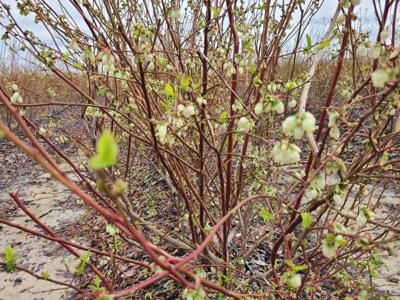
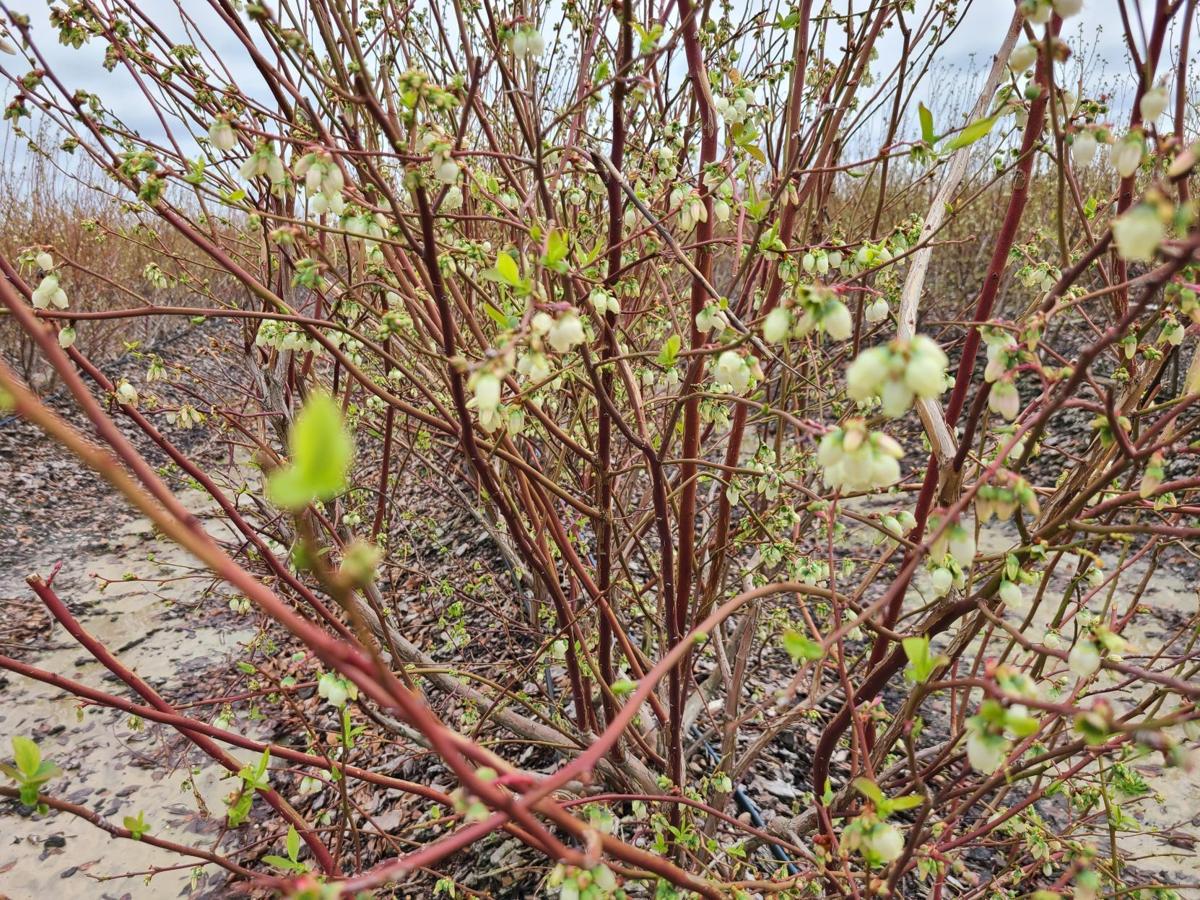
"Blueberries will be similar to last year's plantings," Last said. "Establishment costs are an issue for blueberries."
Last year, about 70 acres of strawberries and 45 acres of blueberries were planted in Orangeburg County alone.
Peaches
Clemson Extension Commercial Horticulture Agent Sarah Scott said predicting the peach season is always difficult, "because there are many factors that play a role in the success of the crop."
"Our weather patterns have been more consistent to what a "normal" year would look like (meaning we have had cooler temperatures that have kept trees from budding out early and no prolonged periods of above-average temperatures to push bloom)," Scott said. "Early varieties have started to bloom and there is bud swell on later varieties."
"The key to a good 2021 season will be a steady rise in temperatures with no extended periods of cold and no late freezes," Scott said. "At 36 degrees, we can get a frost which has potential to damage blooms if they are past a certain stage of being open, so we will watch the weather carefully for that. At this point, however, trees are not in full bloom and can still produce a great crop even with some damage."
"The best preparation we can do is simply wait and see what the weather does and maintain good crop-management practices until then."
Hemp
It is the fourth year that hemp will be grown in The T&D Region.
For the second year, there is no cap on permits for growing hemp if state requirements are met. These requirements include such things as proof of South Carolina residency and a criminal background check.
Justin Ballew, Clemson Extension horticulture agent, said it is hard to predict how many acres will be planted in The T&D Region in 2021, but he said overall acreage was down significantly in 2020 (less than 700 acres) from 2019 (around 2000 acres).
"There were more permit holders in 2020 (around 220) than 2019 (around 120), but so many growers had trouble finding reputable buyers and processors to work with that many didn’t plant," Ballew said.
Ballew said if there are not more buyers and processors of the product that come on board this year, acreage should remain about the same as in 2020.
"Similarly, attracting more buyers/processors will be the key to making hemp a more popular crop in South Carolina," Ballew said. "As of January, there are 14 processors registered with the SCDA. If we have a similar number of permit holders as last year, that is not enough to go around."
Ballew said he has heard there may be more interest in fiber production in 2021 but the jury is still out.
Hemp has been grown in the region since 2018 as part of a state pilot research program for the crop.
About 19 hemp farmers in Orangeburg County grew the crop in 2020.
The crop, however, has not caught the interest of many farmers due the difficulty of crop growers finding buyers for the crop.
Croft predicts maybe 50 acres of the crop will be grown in the county in 2020.
"No one has mentioned planting hemp to me," Croft said.
There was one farmer to plant hemp in Calhoun County and none in Bamberg County in 2020.
The federal Farm Bill signed into law in 2014 approved the growth of hemp for research purposes in the states that allow it.
S.C. Gov. Henry McMaster signed the bill into law in May 2018, making it legal for farmers to grow the crop.
Hemp is a variety of the cannabis sativa plant, but it has much lower levels of THC, which is the psychoactive chemical in marijuana. The crop is tested before planting to make sure the THC levels are not to the point where it is classified as a regulated drug.
Hemp has many potential uses: clothes, food, paper, CBD, cosmetics and even industrial fiber.