

Feed and energy input cost management, labor availability and enhancing biosecurity control measures are top issues facing livestock growers in 2023.
Poultry producers have been hit particularly hard by the high-pathogen avian influenza (HPAI).
HPAI has most impacted poultry prices (chicken and turkey) and egg prices.
"Tens of millions of birds have been affected by HPAI which has created a slight supply issue," Dr. Adam J. Kantrovich, full extension specialist of agribusiness, assistant director of the Agribusiness Team and director of the Clemson Extension Tax School said. "In the past, we see an increase in HPAI during the spring and fall migration of wild birds and the incidence of flocks being affected decreases, allowing our flock numbers to rebound."
"But over the past year or just over, we have seen the incidence of HPAI affecting flocks for longer into the winter, not allowing for a full rebound of numbers to occur," Kantrovich said. "If demand stays similar ... a minimal percentage decrease in supply can have a profound effect on an upward price movement of the product, which is what we have seen with some parts of the bird, but we have seen this play out more dramatically within the egg sector."
People are also reading…
Kantrovich said expectations are there will be an increased broiler slaughter in early to mid-fall of this year, which is expected to hold prices steady to lower through the supply chain.
"So far we are seeing a slight increase week over week but compared to the same week a year ago (2022), we are still slightly down," he said.
Avian influenza is an airborne respiratory virus that spreads among chickens via nasal and eye secretions and manure. The virus can spread between poultry flocks, from wild birds, or via infected poultry, equipment or the clothing or shoes of caretakers.
The virus is not a threat to public health; it does not affect poultry meat or egg products, and such products remain safe to eat.
Kantrovich said from an industry standpoint being able to maintain appropriate biosecurity control to keep HPAI out of a flock will be a key for poultry farmers this year.
Orangeburg County poultry farmer David Funchess Jr. said his farm off Charleston Highway has been fortunate and has not had any issues with avian flu.
"We are taking a lot of measures," Funchess said. "We are keeping people off the farm that is not supposed to be here."
"We are disinfecting the floors, the ceilings and the walls," he continued. "We are doing things to prevent from getting it. It is bad once you get it."
Many area poultry farmers, like Funchess, contract with Pilgrim's Pride or Columbia Farms. The companies provide the birds, feed and veterinary services, while the growers provide the labor, housing, litter and utilities.
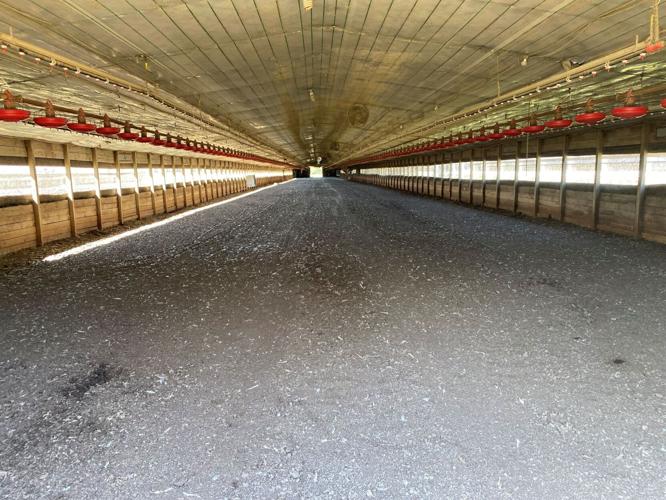
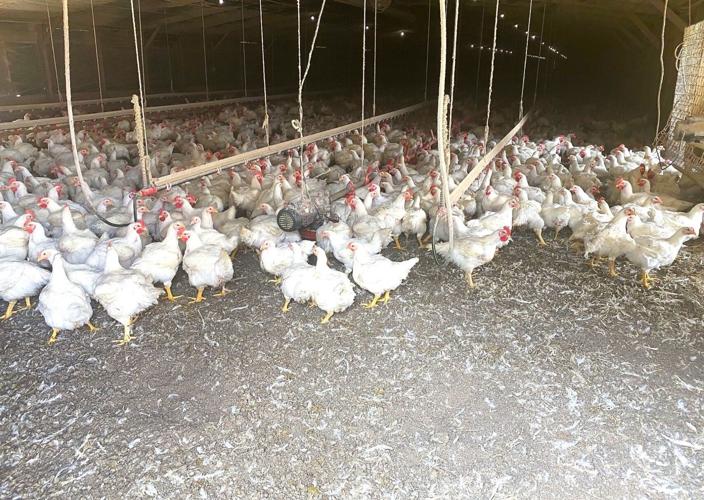
Currently, Funchess has six poultry houses that house between 19,300 to 20,000 birds. The farm grows the birds until they are about nine pounds, which takes about about nine weeks or 63 or 64 days.
Outside of the HPAI, the access and cost of labor, cost of feed and other inputs are issues with which poultry growers are going to have to contend. Those coming into the industry or considering expansion will be concerned with the cost of debt through the increase of interest rates, Kantrovich said.
"We continue to see increased input costs for the grower and integrator with higher-than-average feed costs and some energy costs," Kantrovich said.
Funchess Jr. said on his farm there are regular maintenance upgrades to their houses.
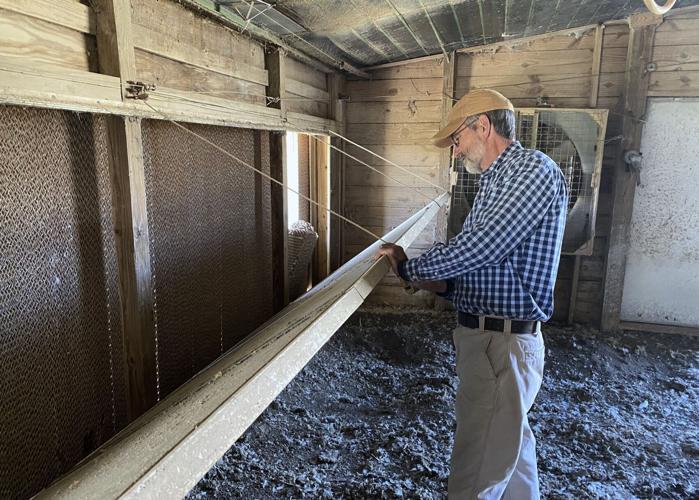
"We are putting in new heating, also new cabling on feed wenches and water line wenches," he said, adding the house cool cell pads have also been replaced.
Funchess said the upgrades can be costly.
"Very," he said. "That is kind of why I like to do it in steps. That way it ain't too big of a burden in the hundred of thousands of dollars to get it done."
"We try to keep everything up to date," he said, explaining how the feed lines and water lines are suspended from the ceiling and serve as a drip system.
"If you don't have good cabling, it will pop and fall down to the floor," Funchess said. "Then you have a mess and they (Pilgrim's) are waiting on you."
As to chicken prices for the grower, Kantrovich said that is a "tricky question to answer" as most local poultry growers are contract growers for integrators.
"What becomes an important factor is the value of the bird once it has been processed and sold at the wholesale market as this begins to determine the value of the bird as it is raised by contract growers," Kantrovich said. "Presently, the national composite whole bird price is slightly below 2022 but remains about 20% higher than the three-year average when compared to this same time period (January-February) last year."
"Specific cuts at the wholesale market are mixed as we are seeing national price for fresh skinless breast (jumbo) price significantly below last year’s price and below the three-year average," Kantrovich said.
"Overall, the poultry prices are relatively steady when compared to the previous month (January) with differences found based on the weight of the bird and which market they are being sold at for the whole bird," Kantrovich said. "If we look at the wholesale market in 'parts,' we are seeing some increases in value month over month for some parts such as with breasts while seeing a slight decrease month over month in with other parts."
Funchess said at their farm, activity has been good.
"Things have picked up a little bit, plus they (Pilgrim's) are starting to give us a little bit more out time and that helps a lot," Funchess said.
He noted that out time means there is a longer time period between flocks. He said the farm used to get flocks every two weeks, but said this time period has been extended to three weeks.
"A lot of people like doing that but you get them back too quickly. The houses don't have time to dry out and ... prepare themselves for the next flock," Funchess said. "Three weeks they get time to dry out pretty decently."
Another issue facing all livestock producers, not just poultry farmers, is a new regulation that requires producers to receive a prescription from a veterinarian to purchase antibiotics.
The regulation will kick in this summer and is expected to increase the cost to a livestock producer if a veterinarian requires payment and or a visit. Producers are asked to consult their veterinarian for further details, Kantrovich said.
Though the HPAI is a challenge, Kantrovich said COVID-related issues do not seem to be so, and this includes the supply chain.
"At this point we are not seeing much disruption internally with the supply chain," Kantrovich said. "However there may still be some issues with import/export markets at some major ports here in the U.S. and in certain parts of the world."
Inflation, however, does continue to be a challenge.
"Inflation will continue to be an issue, especially as it relates to the costs of capital assets and increased cost in borrowing money through increased interest rates," Kantrovich said.
Kantrovich said trade is always a matter that should be kept at the fore.
"We need to continue to work with our present trading partners such as Mexico and Canada while we attempt to expand our exports to new or growing partners," he said.
Beef cattle
"The greatest concern for beef cattle farmers (in 2023) will be input cost management, both on animal health and feed and forage," said Matt Fischer, Clemson area extension associate of agribusiness. "Most importantly fertilizer will impact both feed and forage input costs."
"Feed costs and fertilizer prices remain a focus for cattle farmers," Fischer continued. "Some fertilizer prices have fallen from 2022, but planting intentions report could move prices upward."
Fischer said heading into 2023, "premium pricing" for feeder cattle continues to be received by producers in comparison to the five-year average.
"Cattle prices in South Carolina are still strong with respect to 2022," Fischer said. "Depending on the calf marketed, 2023 prices are between 5-8% higher than 2022."
The reason for the healthy prices?
Continuing national herd liquidation due to extended drought conditions in large cattle-production regions of the U.S., Fischer said, noting this is constraining supply on the national level. "South Carolina did see limited expansion in the total cattle and calves inventory in January 2023 in comparison to January 2022."
Fischer said beef demand at the retail level has held in comparison to the other protein markets.
"The demand for beef could lose ground depending on the overall U.S. economy," he said.
Like any other sector, supply chain issues are unknown and inflation challenges will "require cattle farmers continue to carefully apply resources in the most productive and profitable manner."
Dairy
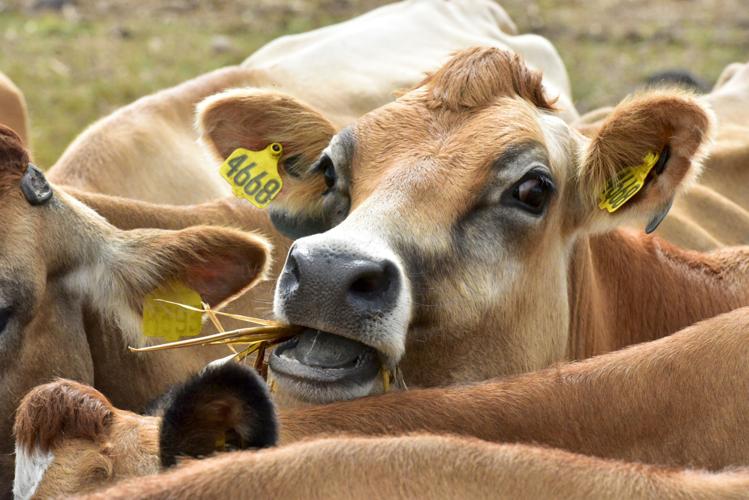
Kantrovich said dairy farmers' concerns this year include availability of labor, input costs, in particular the cost of feed as well as the cost of trucking and hauling milk.
"Feed costs continue to be high and labor costs have continued to increase," Kantrovich said. "Labor continues to be a challenge in cost and finding and retaining good labor. The labor workforce pool for these types of positions continues to dwindle, especially in rural areas."'
This comes on top of softening milk prices.
The United States Department of Agriculture milk prices (which run three months behind) showed in the last quarter of 2022 a slight softening in the mailbox price farmers are receiving, though it was still much higher than the previous year, according to Kantrovich.
Milk prices have continued to soften in 2023.
"For most of each of the different classes of milk, we are lower than we were in the summer of 2022," Kantrovich said. "We expect a continued deterioration of prices by potentially another 10% through the month of March."
Kantrovich did note the futures prices for milk are seeing a slight increase, but said the volume of trading has been "relatively light to nonexistent for the fall."
"I would not hang my hat on those values yet," Kantrovich said.
The outlook for the remainder of the year is mixed, Kantrovich said.
"We are expecting a lower milk price with continued high input costs," he said. "Indications right now are for lower cow inventory and a decrease in dairy-related exports compared to the previous year. We are also expecting a slight softening in demand for dairy products this year, which will not help."
Kantrovich said due to the decrease in cow inventory, milk production is also expected to decrease.
"However as we have seen in the past due to proper dairy nutrition and care and through proper breeding programs, historically we have seen increases in milk production per cow, so we will need to see how much of this will occur this year in comparison to the milking cow inventory," Kantrovich said.
Kantrovich noted that in 2022, milk cow numbers increased for the first half of the year while remaining steady through most of the fall before dipping below where they were at the beginning of 2022.
"During this time, we also watched the milk per cow increase slightly over 2021 with overall milk production ending higher in 2022 vs. 2021," he continued. "We will have to keep a close eye in 2023 for the number of milking cows, replacement heifers and milk production per cow."
Kantrovich said last year was historic for replacement heifer inventory when looked at as a percent of milk cows compared to the previous 22 years.
He said replacement heifer inventory was the lowest since 2006.
"So what does this mean?" Kantrovich said. "Given the higher input costs many producers may have looked to cull more heavily and/or not hold back heifers for replacement for the need to conserve or lessen their cost on feed for the milking herd, therefore lowering the milking herd moving into the near future," Kantrovich said.
He said the state has continued to see a reduction in commercial dairies and milking cows over the years.
"I do not expect this trend to end anytime in the near future," he said.
Outside of liquid milk, Kantrovich said cheese prices are expected to soften in 2023 after seeing an increase in 2022 over 2021 prices.
"Our ending stocks in American cheese were down at the end of 2022 when compared to the end of 2021, while other-than-American cheese was up providing an overall increase in ending stocks for all cheese," Kantrovich said.
While dairy farmers see challenges, Kantrovich said he is not aware of any lingering impacts of COVID on the industry.
Inflation, however, continues to have an impact.
"We are seeing price adjustments," Kantrovich said. "In all aspects, some of which are inflationary, while others are typical volatility found within the agricultural and food markets."
He said price adjustment due to typical volatility "could correct itself once a series of variables begin to return to 'normal.'"
According to the 2017 agricultural census, Orangeburg County ranked second in South Carolina in the number of milk cows at 3,100. The census shows the county has 20 dairy farms.
Despite the decline in dairies over the years, Orangeburg County ranked second in South Carolina in total milk production in 2012 at 48.5 million pounds, according to Southeast Dairy.
The dairy business in Bamberg County, like the rest of the state, has decreased significantly since the 1980s.
There are 10 dairies remaining in the county. The county ranked third in the number of milk cows at 1,800.
Calhoun County does not have any dairy farmers and has not had any for several years.
The Sandy Run Dairy is situated in the northern part of the county just off Interstate 26 at Exit 125 on S.C. Road 31, but the cows that produce the milk for the ice cream it makes and sells are raised outside of Calhoun County.
Swine, hogs and pork
Fischer said the top concern for swine, hog and pork producers in 2023 is biosecurity and energy costs.
Robust energy costs are combining with "strongly discounted" lean hog prices compared to this time in 2022.
"Current prices are trending to prices realized in 2019," Fischer said.
The silver lining is demand.
"Pork demand could see an uptrend, which has been relatively flat in recent years," Fischer said. "Increased pork demand will offer opportunities for hog producers."
Fischer said impact from COVID remains in the swine and hog sector but most is "coming from outside the U.S. and is unknown what will result."
"Input supply chain issues faced by pork farmers are the same for every other producer, unknown," Fischer said.
Fischer said a potential positive for the pork sector is food price inflation.
"Inflation in food prices could be beneficial for pork demand, taking from what has been strong beef demand," he said.
Fischer noted input costs vary by production method.
"Input costs to watch can be: energy cost, medication cost, feed cost and overall infrastructure cost," he said.
Swine's place at The T&D Region table continues to remain small as integration has kept many farmers from entering the business.
Texas-based Cactus Feeders, which purchased Orangeburg Foods in 2015, is the only significant swine operation locally.
Cactus Family Farms, a division of Cactus Feeders, breeds, gestates and weans pigs and then transports them to be grown and sold to packers. The company also provides farmers with feed and hogs.