


Drought negatively impacted vegetable production in Orangeburg County, while disease and insect pressure also made for a challenging year for fruit and vegetable growers in 2019.
"There were drought problems for farmers without irrigation systems," Orangeburg County Commercial Horticulture Clemson Extension Agent Eulalio Toledo said. "Those growers with irrigation fared better."
Challenging growing conditions coincided with generally fair commodity prices across the board, Toledo said.
Fruits and vegetable production continues to be an important part of Orangeburg County's economy, bringing in an annual estimated $13.7 million, Toledo said.
Toledo said fruits and vegetables had contend with their insect and diseases in 2019.
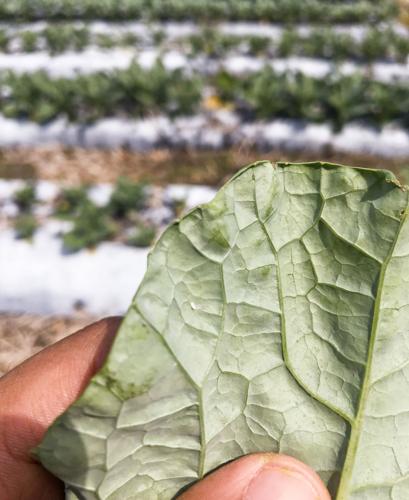
The diamond-back moth and whiteflies were pests for green-leaf vegetables, Toledo said.
People are also reading…
The diamond-back moth caused some plant damage. Whiteflies, which are tiny, sap-sucking insects typically prevalent in warm weather, were also a problem for leafy vegetables. The flies excrete a sticky honeydew and cause yellowing or death of leaves.
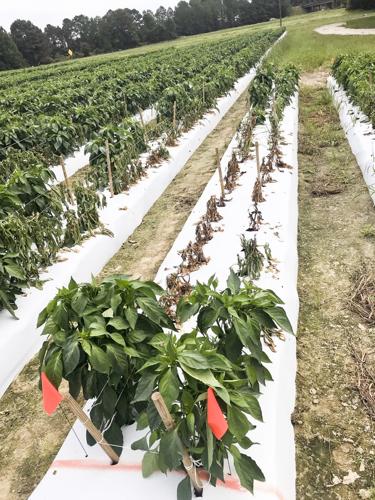
Peppers in the area also suffered from some soft rot, Toledo said.
Local vegetables also suffered from phytophthora blight, which can attack the roots, stems, leaves and fruit, depending upon the stage at which plants are infected, Toledo said.
A man-made issue facing farmers, especially larger fruit and vegetable growers in 2019, is the new Food and Drug Administration Food Safety Modernization Act, or FSMA, Toledo said. The act regulates food safety in vegetable production.
The FDA has finalized seven major rules in the implementation of FSMA.
The government regulations require all food facilities to register with the FDA, putting in place different regulations for operation.
Regulations include coming up with a food safety plan; implementing safe growing and harvesting standards; requiring the business to make sure importers verify their foreign suppliers are producing food in compliance with applicable FDA regulatory requirements; conducting food safety audits by third parties; transporting food safely, and creating a food defense plan.
Here is a breakdown of some of the county's top commodities individually and how they fared in 2019.
Sweet potatoes
About 700 acres of sweet potatoes were planted in the county, with dry conditions being the biggest impact.
Despite the drought, Toledo said sweet potatoes had a good year. Nematodes were among the biggest culprits damaging some of the crop.
"It was nothing detrimental," Toledo said.
U.S. No. 1 sweet potatoes traded at $20-28 per carton on Oct. 14, according to the U.S. Department of Agriculture market report for the middle of October. That is higher than farmers received last year.
Prices are "fair. Most farmers are content," Toledo said.
Greens
An estimated 1,300 acres of greens were planted in Orangeburg County in 2019 and suffered from drought.
Green quality suffered from some bacterial spots and the lack of crop rotation, Toledo said.
Collards and turnips were priced at about $20 per container, according to the USDA market report.
As with sweet potatoes, Toledo said prices for greens are good.
"Farmers can't complain," he said.
Tomatoes
About 90 acres of tomatoes were grown this year in the county, with much of the crop being negatively impacted by Southern stem blight.
"(Southern stem blight) is a disease that affects the whole plant right before harvest," Toledo said. "Bacterial wilt was another big one."
The crop quality was decent but did suffer from the diseases mentioned, Toledo said.
Unlike other commodities, prices were lower than desired for tomatoes this year, Toledo said. They hovered at about $12 to $14 per carton, according to USDA.
Squash
Squash was not a big player in Orangeburg County, with only about 30 acres planted in 2019.
"Production was OK," Toledo said. "Diseases played a big role in decreased production."
Toledo said squash quality did suffer from mildew issues, such as powdery mildew, downy mildew, as well as pressure from silver leaf whiteflies.
"Demand was high and prices were good," Toledo said.
Hemp
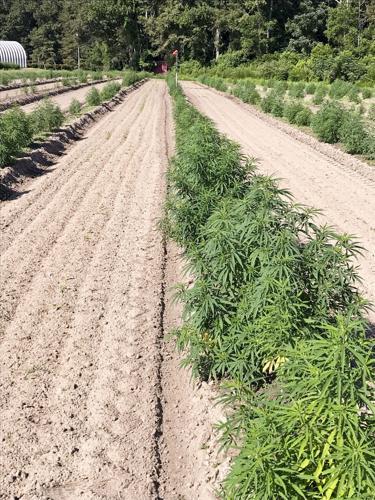
Hemp was grown for the second straight year in Orangeburg County as part of a pilot research effort.
There are 10 hemp growers in Orangeburg County and 14 in the entire T&D Region.
Hemp producers faced a dry, warm growing season, along with high disease pressure.
"We're still harvesting so we won't have a good estimate on drought-related damage for a while still," Toledo said. "We expect yield to be around 1,000 pounds of dried floral material per acre."
Toledo said hemp farmers did have more disease (fusarium wilt and bacterial wilt) this year compared to last.
The federal Farm Bill signed into law in 2014 approved the growth of hemp for research purposes in states that allow it.
S.C. Gov. Henry McMaster signed a bill into law in May 2018 making it legal for farmers to grow up to 20 acres of the crop for research purposes.
The new S.C. law defines industrial hemp as any part of the plant with a THC concentration that does not exceed .3% on a dried-weight basis. Anything above that is considered marijuana and is illegal in the state.
About 74 farmers were approved for the S.C. Hemp Farming Program by the S.C. Department of Agriculture in the second year of the crop's growth in the state.
Combined with the original 40 growers who were issued permits in October 2018, there are now 114 permitted hemp farmers across 34 counties.
The criminalization of hemp began in 1939 when the federal Marijuana Tax Act strictly regulated the cultivation and sale of all cannabis varieties.
The federal Controlled Substances Act of 1970 classified all forms of cannabis as a Schedule I drug, making it illegal to grow in the United States. As a result, the industrial uses for hemp evaporated and were largely forgotten.
Contact the writer: gzaleski@timesanddemocrat.com or 803-533-5551. Check out Zaleski on Twitter at @ZaleskiTD.

Gene Zaleski
T&D Staff Writer


