
Cool, wet, hot, dry and the coronavirus.
The year 2020 threw just a little bit of everything at Orangeburg County row crop farmers in what is generally being described as an "OK growing season" complete with ups and downs.
"Cool, wet spring slowed growth of cotton and peanuts but helped the corn crop," Orangeburg County Clemson Extension Agent Jonathan Croft said. "Across most of the area, there was bumper corn crop this year."
Then Mother Nature shut off her faucet.
"Dry, hot conditions during midsummer slowed peanut growth and hurt the yield potential of some early planted soybeans," Croft said.
Mother Nature then turned on the air conditioning a little earlier than normal.
"Cooler temperatures in late summer continued to slow the development of peanuts and some cotton and we are seeing delays in harvest," Croft said.
People are also reading…
If the typical uncertainties of agriculture were not enough, COVID-19 hit right around planting time in the spring.
"Where many other industries were completely shut down, agriculture kept moving but with some delays in processing due to plant facilities being shut down or processing capacity was reduced when COVID infected employees in these facilities," he said. "On the farm locally, things kept moving."
Orangeburg County row crop farmer Jeffrey Kaigler said COVID was not without its challenges.
"It has hurt our markets," Kaigler said. "Everything shut down."
Kaigler specifically pointed to the slowdown with China in cotton. The country is one of the U.S. largest markets for U.S. exports.
"All manufacturing is over there," he said.
Grains used for feed also saw a price hit when meat-packing plants shut down after employees were infected with the virus. The demand for grain feed was impacted.
The U.S. Department of Agriculture Farm Service Agency also provided farmers with aid through its Coronavirus Food Assistance Program.
The program provided direct relief to producers facing price declines and additional marketing costs due to COVID-19.
Over 160 commodities are eligible for CFAP, including certain non-specialty crops, livestock, dairy, wool, specialty crops, eggs, aquaculture, nursery crops and cut flowers.
"We suffered a 30% demand erosion across the board," said Jim Traywick, who farms in Cope at Frog Level Farm. "People did not need blue jeans and did not buy gas or food. There was a huge disruption in the food service business."
In light of all the uncertainty, Kaigler hopes he will be able to make some money this year.
"We got good yields and corn has been coming up a little bit," he said. "Hopefully that will give us an opportunity to have a decent price."
Soybean prices had also crept up a little at the time of this writing.
Cotton on the other hand needs a lot of help.
"It is not where it needs to be yet," he said. "But we are hoping there is some opportunity in this market."
"It could be a better year than anticipated," Traywick said, commenting on the combination of average-to-above-average yields across the board and improving prices.
It has been a challenging time for farmers over recent years.
In 2015, farmers had to deal with the historic flood, and in 2016 Hurricane Matthew made its presence felt.
And in 2018, Tropical Storm Michael brought gusty winds and heavy rains, damaging some of the cotton crop and delaying the harvesting of peanuts.
Corn
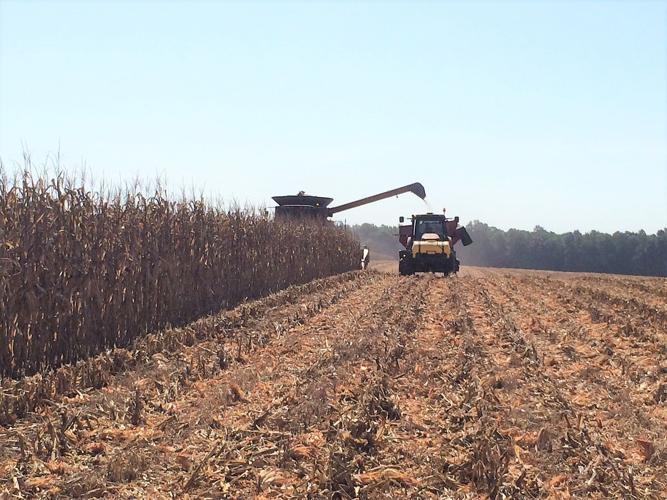
According to Croft, about 35,000 acres of corn were planted in the county in 2020. About 75% was dryland.
This is about 3,500 acres more compared to 2019.
Dryland corn saw an average yield countywide of about 125 bushels per acre, with some pockets seeing excellent non-irrigated corn, Croft said.
"The cool, wet spring helped the crop the most ... average temperatures during most of the summer along with timely rainfall was the key to the crop's success," Croft said. "This year most non-irrigated corn was right on target or better than what farmers were planning for."
Croft said dryland corn could have done even better but there were "some pockets that were hurt by several weeks of hot, dry weather."
Last year, dryland corn averaged about 55 bushels per acre.
Irrigated corn averaged about 230 bushels per acre, which was just about where farmers would like to see the yield. The farmers would like to see at least 250 bushels per acre if not higher, Croft said.
"Yields were about average to above average for most farms," Croft said. "In a wet year, we don’t see the big yield bumps from irrigation, so there were no extremely high yields. But yields were very consistent."
Adequate rains in the spring and early summer helped farmers who irrigated the crop cut down on irrigation costs.
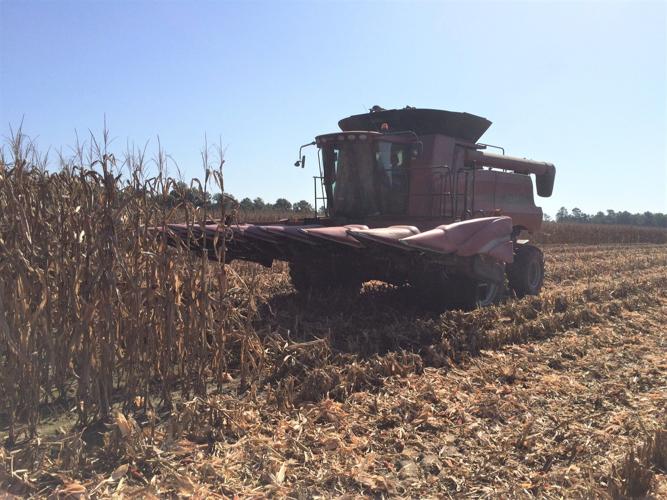
Dry conditions in early September also created an ideal time for corn harvest.
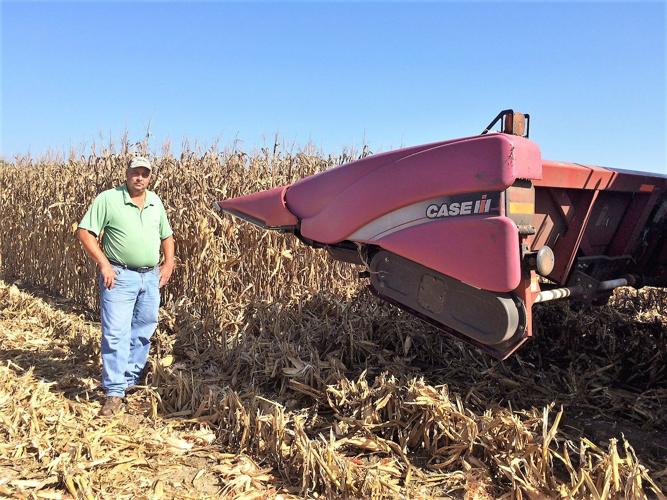
Orangeburg County farmer Jeffrey Kaigler grew about 1,000 acres of corn, both irrigated and dryland. His dryland ranged anywhere from about 120 to upward of 170 bushels per acre.
Kaigler said timely rains and lower temperatures helped the corn crop.
Traywick grew about 400 acres of corn.
"It was a good season," Traywick said. "It was probably the best corn ever, especially for dryland."
Providence farmer Dean Hutto of Hutto Brothers Partnership grew about 1,500 acres of corn.
"Dryland corn was excellent with all of the rain we had," Hutto said. "The irrigated was average or maybe just a bit below average."
Timely rains and moderate temperatures helped Hutto's dryland corn crop on the eastern end of the county.
"I am not sure why the irrigated corn was not as good as usual," Hutto said. "I have talked to some neighbors who experienced the same. Maybe it was a bit too much rain early on."
There were no major disease or insect pressure issues for corn in 2020.
Farmers are hoping above-average yields will help offset some of the sluggish corn prices.
Corn prices are coming in at about $4 per bushel, which is lower than the desired profit-making range of about $5 to $5.50 an acre. Croft said depending on marketing strategies, some farmers could see $4.50 bushels per acre on delivery.
"At current prices, profit margins are very slim to none," Croft said.
But Traywick said commodity prices for corn have improved as the year has gone by.
"The Chinese are buying and doing their share," he said. "They are buying soybeans and corn, not so much cotton."
"Exports are good and ethanol is coming back a little bit," he said.
Traywick said that earlier this year, corn was hovering around $3.40 a bushel.
Hutto said he was proactive when it came to potential COVID impacts on his corn crop.
"We bought a lot of our inputs early because we were uncertain if there would be an issue in the supply chain," Hutto said. "Just like all other commodities, COVID really hurt prices early in the season."
Cotton
Kaigler grew about 650 acres of dryland cotton. As of the middle of October, he had not started picking the crop.
"I think it will be fair," he said, noting he is not sure if yields will be as good as what they should be.
While rain and cooler temperatures were beneficial for corn, cotton typically needs something a little different from Mother Nature.
"We had a cooler season and cotton likes hot weather," Kaigler said. It needs water, of course, but I think too much rain on the cotton washed away some of the nutrients. It was raining very regular."
Despite some concerns, Kaigler said he thinks there will be a decent cotton crop.
Hutto, who planted about 300 acres of cotton, said his cotton looks like an above-average crop "if we can get it all harvested."
Generally, good weather with the exception of one untimely dry spell did impact his cotton, but not to a great extent, Hutto said.
Across the county, there were approximately 23,000 acres of cotton planted, down from 37,400 last year.
About 80% of the acres are non-irrigated.
Croft said while harvest has just begun, he expects yields to be about average.
Croft said farmers would like to see irrigated cotton yielding 2-1/2 to 3-1/2 bales per acre. Farmers would like to see dryland cotton yielding 1-1/2 to 2-1/2 bales per acre.
"Fields that have excellent yields were due to timely rainfall during the summer and in some cases, fields that didn’t receive too much rain," Croft said.
But Croft, echoing Kaigler, noted the wet weather has served as a double-edged sword.
The crop has not done as well as it could have due to a cool, wet spring and late cool, wet conditions as it tried to finish up, Croft said.
Traywick grew about 500 acres of cotton and says for him, the jury is still out on the crop. He had not begun to harvest cotton at the time of this writing. He is expecting an average crop.
Croft said insect and disease pressure were not beyond the norm, but there were some issues.
"We did have a few fields that were treated specifically for boll worm, which we don’t normally see with the Bt gene cotton varieties we grow now," Croft said.
Cotton prices have also been very low, running between 65 to 70 cents per pound. This is well below where farmers would like to see prices at 85 cents a pound.
Croft said COVID did depress cotton prices "that were already low due to trade issues."
"At the current prices, a farmer has to have excellent yields to barely break even," Croft said.
Cotton prices have bounced back -- relatively speaking.
Traywick said earlier this year the crop was in the low 50-cent range.
"Cotton prices out of all the commodities are the worst," Hutto said. "We cut our acres 80% from last year because of low price."
Peanuts
About 10,000 acres of runner peanuts -- both irrigated and non-irrigated -- were planted in the county.
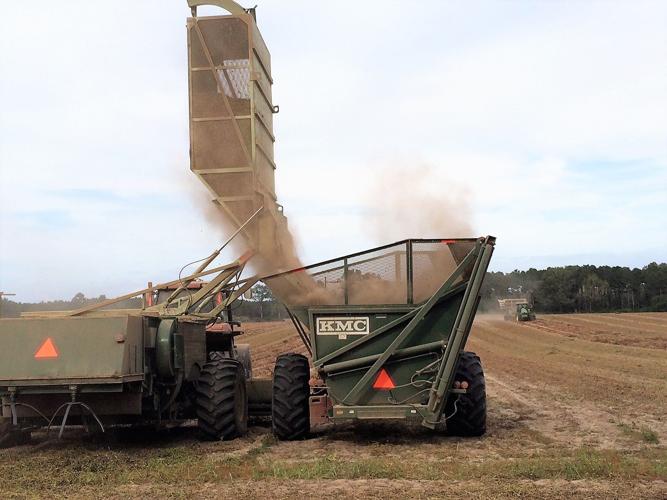
As of this writing, Croft said the peanut crop was still being harvested and yields were undetermined.
"So far, even though I don’t have exact yields for runner peanuts, there are areas that I am expecting above-average yields," Croft said. "There are also a lot of acres that will be below average due to delayed matured and heavy rains from remnants of tropical systems that passed over us several weeks ago."
Croft said weather conditions through the beginning of November will dictate final peanut yields.
Kaigler grew about 600 acres of dryland peanuts and by the middle of October had dug up half of the crop.
"Timely rains were all good for peanuts," Kaigler said.
Hutto planted about 350 acres of peanuts. He had just started harvesting peanuts, but the early crop overall looks good.
Good and timely weather also benefited the peanuts, though some peanuts on lower land were drowned out or had too much rain, Hutto said.
For irrigated runner peanuts, farmers would like to see yields in the 5,000 to 6,000-pounds-per-acre range. For dryland runner peanuts, they would like to see average yields at 3,500 to 4,000 pounds per acre.
There were approximately 3,500 acres of Virginia peanuts planted, which is slightly down from 2019.
Croft said the Virginia peanuts are also still being harvested, meaning yields are not known as yet.
The desired yields for irrigated and dryland Virginia peanuts are the same as for runner peanuts, Croft said.
Croft said Virginia peanuts were helped with timely rains and average temperatures. Both factors helped set a good crop early, Croft said.
Like runners, Croft said Virginia peanuts are also expected to suffer due to "maturity delays and wet conditions after a lot of acres were dug."
"We are about two or three weeks behind on peanuts," Traywick said.
Harvest was further delayed when heavy rains flooded fields, forcing Traywick to stop picking.
"We are going to get going tomorrow, but it could ruin our weekend," Traywick said heading into the weekend of Oct. 17-18.
Croft said there was nothing unusual about disease pressure in peanuts in 2020.
"For most of the season, we didn’t have any huge issues with insects and disease beyond normal. However, wet conditions near the end of the season and some fungicide sprays that were rained off early led to late leaf spot issues in some fields."
White mold has also been a problem in runner peanuts, Croft said.
Peanut prices are at about $450 a ton under contract, lower than desired and about the same as last year. "Farmers would love for prices to be $550-plus per ton. At current prices, profit margins are very slim."
As to COVID impact, Croft said for both runners and Virginia peanuts, prices were pretty much set before COVID started and impacts on price will more than likely be seen in the 2021 contract offers.
Soybeans
There were approximately 16,500 acres of soybeans planted, which is up about 3,000 acres from 2019.
About 90% of the acres were non-irrigated.
Croft said while some harvesting of the crop has begun, most soybeans are still several weeks away from being mature enough to harvest.
"Farmers would like to see dryland yields averaging 35 to 40 bushels per acre," Croft said. "Farmers would like to see irrigated yields averaging 60-plus bushels per acre."
Timely rains and average temperatures helped the crop, though a hot, dry spell in midsummer is expected to have negatively impacted the yield potential of soybeans, Croft said.
"Weather conditions at harvest could have a major impact on what final yields are," he said.
Kaigler grew about 600 acres of dryland soybeans.
He says harvest of soybeans will not take place until November though he says the crop is looking like it benefited from rains and adequate temperatures.
Hutto grew about 800 acres of soybeans.
"It looks like a great soybean crop," Hutto said, noting Mother Nature has been kind. "We were very close to having the beans hurt by a dry spell but ended up catching a rain just in time."
Insect pressure was also present.
"Velvet bean caterpillars have been a problem in some areas and if left untreated did impact the crop with significant defoliation," Croft said.
The crop also was impacted by Asian soybean rust.
"It showed up near the end of the growing season and fields that did not receive a fungicide have seen significant defoliation take place," Croft said. "In some fields, there will be a 5 to 10% yield reduction because of the early defoliation."
Through the middle of October beans were at about the $10.50 range, Croft said.
"This is higher than they were when beans were planted," he said.
Farmers would like to see soybean prices at $10-plus per bushel.
"Before planting it (COVID) had a negative affect on prices," Croft said. "Currently potential yield of crops in major soybean-producing areas of the U.S. are impacting prices and are allowing them to increase."
"Soybeans are like corn prices, they are not where we want or need them to be but. Hopefully we can get them harvested and they yield as good as they look," Hutto said.
Wheat
About 3,000 acres were planted in 2020, yielding about 70 bushels of acre. This is down from where farmers would like to see yields of about 80 bushels plus per acre.
"Timely rains in the early spring helped the small grain crops this year," Croft said, noting wet conditions at harvest did hurt some fields.
Insect and disease pressure was average for the crop in 2020.
The story on wheat prices has been one of flux.
Prices have been on the rise and are now trading close to $6 per bushel, Croft said.
"This has increased the interest in planting wheat in the area for fall of 2020," he said, but the $6-a-bushel price is still below where farmers would like to see wheat at $8 per bushel.
"Low prices are continuing to cause planted acres to be really low compared to historic wheat planting in Orangeburg County and South Carolina in general," he said.
"COVID did not help matters as it hit during the time when exports were having problems being moved, Croft said.
Overview
"Agriculture continues to be a leading industry in Orangeburg County and employs a lot of residents," Croft said.
According to the 2017 Census of Agriculture, Orangeburg County is home to 978 farms consisting of about 293,790 acres. The average size of a farm is 300 acres.
These numbers are down from the 2012 census of 1,056 farms but up in the average farm size. The 2012 census reported an average farm size of 268 acres.
The 2017 numbers bucked a decade-long trend of smaller farm sizes.
Overall, Orangeburg County ranked second in South Carolina in total market value of crops and livestock and poultry sold at $213.9 million in the 2017 census.
The county has a total of 726 cropland farms consisting of about 165,516 acres.
Orangeburg County ranked first in the state in market value of crops sold at $107.2 million.
The county ranked first in the state for the most cotton sold at $22.2 million and first in total sales of other crops and hay at $22.3 million.
The county's largest crops in planted acres in descending order are corn, cotton, peanuts and soybeans.
Agricultural census data is taken every five years.