

Local poultry farmers say 2020 was a relatively normal year on the farm despite the market uncertainties brought on by the coronavirus.
"It has been pretty good, better than farming," Orangeburg County poultry farmer David Funchess said.
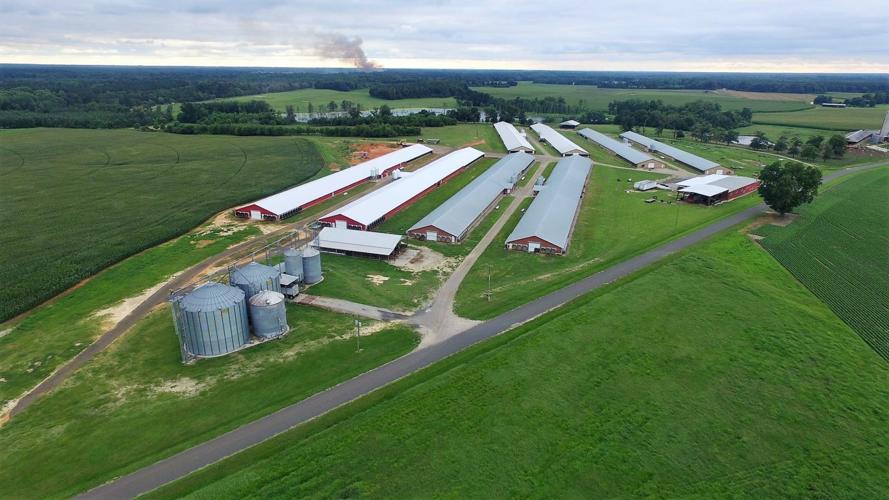
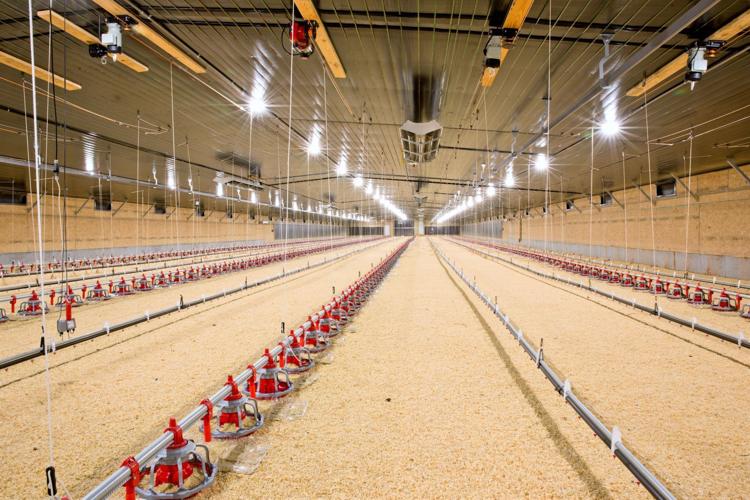
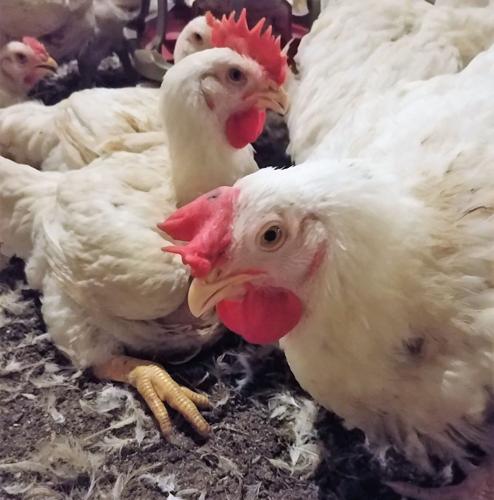
Funchess has six poultry houses with each house having about 19,000 birds. He grows the birds until they are about 9 pounds or for a period of about 62 days. He contracts with Pilgrim's Pride.
For many poultry farmers, the coronavirus caused supply disruptions due to economic shutdowns, but Funchess says he did not see it on his farm.
"We have not had any downtime so to speak," he said. "It has been pretty normal."
Funchess said the downtime this year between flocks is about 10 to 18 days.
"I can live with two weeks," he said. "That is not a bad turnaround really."
People are also reading…
Funchess was able to make some improvements on the farm in 2020.
He recently modernized his poultry houses, putting in an alarm system as well as changing water systems.
He also changed the electric system in three of the houses in order to accommodate three additional fans.
Down the road in Bamberg County, Olar poultry farmer Barry Brubaker has four poultry houses with a total of 30,000 square feet for the chickens.
The farm, which raises poultry for Columbia Farms, typically has about 280,000 chickens, or about five flocks, a year.
Brubaker said despite the number of uncertainties surrounding 2020, Brubaker Farm has come out relatively unscathed from the global turmoil.
"2020 hasn't really changed anything for us," Brubaker said, noting even with COVID-19, all has been normal. "It hasn't impacted us much."
While Funchess and Brubaker say they did not feel the ripple effects of COVID-19 on their farm, Clemson Extension Associate Professor of Agribusiness and Economist at the Sandhill Research and Education Center Dr. Adam Kantrovich said many poultry farmers described the year as "difficult" for the agriculture sector.
Kantrovich said many contract producers this year have had additional time between when a flock leaves the farm and the next flock moves in.
"The period of time has varied between grower and integrator," he said. "What this ends up doing is potentially pushing some income that was expected in this year to the following and, if these extended times between flocks continues into 2021, could reduce the number of total flocks a farmer will be paid on over a two-year period of time.
"This can be significant as our farmers that are raising the birds are reliant on that income per flock to not only cover the direct expenses associated with the flock but to cover the overhead costs of the farm as well as possibly needed to make loan payments and to cover living expenses for the family," Kantrovich said.
Many local farmers contract with Pilgrim's Pride or Columbia Farms.
The companies provide the birds, feed and veterinary services, while the growers provide the labor, housing, litter and utilities.
Kantrovich said initially the coronavirus impacted the poultry sector through the loss of processing capacity, freezer space/cold storage for the birds and in some cases logistical issues.
"We saw fewer eggs and then birds being placed as this is a mechanism to control inventory until frozen product was able to make its way to market," he said. "Once this was able to occur and processing came back online with logistical hurdles overcome, we began to see a move toward normalization."
Kantrovich said all is still not totally back to normal.
"There continues to be some minor disruptions which are being handled through a longer time period between flocks in a house, fewer birds possibly being placed and even having to look for other markets for the birds," he said. "We are also typically seeing heavier birds being processed."
As of the week ending Oct. 10, broiler-type egg sets are down about 3% when compared to the same week period of 2019, Kantrovich said.
Kantrovich also noted that broiler-type chick placement is about 114% compared to the same week in 2019, according to USDA data.
Turkey placement was also down for August 2020 by 9.2%, which is an indicator for expected Thanksgiving production, said Dr. Nathan Smith, Clemson Extension professor and economist.
"Placements took a steep dip in May most likely due to COVID-19, although South Carolina was also dealing with the first confirmed case of highly pathogenic avian influenza (HPAI) in the United States since 2017," Smith said. "Turkey placement has trended below 2019 since January 2020."
Overall, Smith said the data indicate that total annual turkey production for the year may be off.
"The indications right now seem to point that looking at the 2021 year, we may be close to normal. But with some challenges ahead, that may require continued inventory management to occur," Smith said.
Kantrovich said demand for poultry cuts such as chicken breasts and wings have been running slightly higher than 2019 levels, while the remainder of the cuts and the broiler composite have been valued less than last year when looking at the prices from late February 2020 through mid-September 2020.
Prices for frozen hens are expected to stay at the higher 2020 level compared to 2019 and maybe improve some more by 2021, Kantrovich said.
"Wholesale frozen whole-hen turkey prices have been consistently 20 cents above 2019," Smith said. "However, wholesale fresh tom turkey breasts prices have been doing the opposite, consistently 30 cents below 2019 since June and dropping as much as 50 cents during April and May of 2020."
Poultry supply annually varies from month to month or even week to week.
This year these cycles have broken especially as it relates to broiler egg sets, chick sets and processing.
"For most of these, we are seeing a higher than what was the average between 2014 through 2018 and either slightly below to close to where we were for 2019 with some peaks above and below those points," Kantrovich said.
Smith said turkey production experienced a big drop in federally inspected ready-to-cook production in April 2020 but recovered to average by June.
Turkey slaughter year to date as of Oct. 3 was down 2% nationally.
"Total turkey supply will be below last year as a result," Smith said. "Total supply, however, is enough to meet demand with cold storage and some increased imports in 2020. We expect to see production increase in 2021."
"We also expect continued demand outside the U.S. to be able to export our poultry products," Smith said. "Turkey demand is mixed as the holiday demand is expected to be good but there could be a run on smaller birds and cuts of meat vs. the large whole birds due to smaller gatherings."
"Fresh tom turkey breast prices and parts are expected to struggle below 2019 prices as the pandemic continues," Smith said.
Overall, turkey prices are above 2019 and expected to remain higher in 2021, Smith said.
Kantrovich said across the poultry world -- from farmer to processor and integrator -- the story of prices has been primarily a story of the COVID-19 pandemic vs. any trade issues.
"There are some avian-related diseases that have had a significant negative effect in some countries that has allowed the U.S. poultry industry to see some gains," Kantrovich said. "If it were not for that, trade may have played a larger role, harming our poultry industry."
Kantrovich said U.S. poultry farmers are helping to fill gaps created by continued challenges overseas with protein production of hogs and poultry because of such things as African swine fever and Avian Influenza diseases within their herd and flocks.
These gaps are being filled through the export markets.
"Two of the biggest challenges are finding a market for some cuts such as the leg quarters and, if additional waves of COVID-19 continue to persist, to be able to maintain processing capacity, cold storage space and transportation to move product," Kantrovich said.
As with any year, poultry producers continue to deal with labor and feed costs.
"The feed costs will be tied to the cost of corn and soybeans for which we have been recently seeing a rise in futures prices since August," Kantrovich said. "We will need to see how the harvest turns out and if it matches USDA estimates."
Generally, over the last five years, the region's poultry sector has stabilized in chicken farms after seeing a decline over the past few decades.
Production has decreased somewhat though.
There were 59 broiler chicken farms in Orangeburg County in 2017, compared to 57 in 2012. The number of broiler chickens decreased in the county from 4,354,176 in 2012 to 4,129,552 in 2017.
This ranked the county fifth in the state.
Calhoun County has seen the number of chicken farms increase from six in 2012 to nine in 2017. The number of chickens produced decreased from 1,093,600 in 2012 to 925,000 in 2017.
This ranked the county 15th in broiler inventory.
In Bamberg County, chicken farms continue to be a rarity, with five farms in 2017 compared to four in 2012.
The number of broiler chickens in the county was 350,200 in 2017. This ranked the county 20th in the number of broiler chickens. The 2012 numbers were withheld to avoid disclosing data for individual farms.
Like other agricultural sectors, the county's poultry industry is comprised primarily of farmers contracting with large companies to grow chickens.