


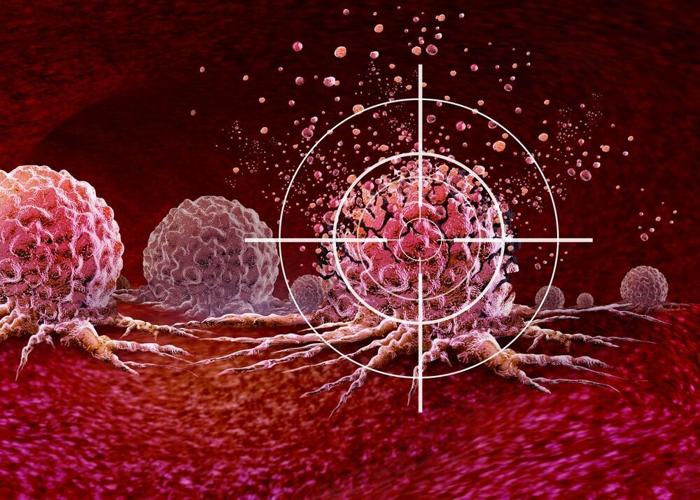
Radiation therapy is an important treatment option for lung cancer. Depending on the type and stage of the cancer, it may be used to cure the cancer, reduce the risk of recurrence, control cancer that cannot be removed surgically, or relieve symptoms.
How radiation fits into a treatment plan
The role of radiation depends on whether a person has non-small cell lung cancer (NSCLC) or small cell lung cancer (SCLC), as well as the cancer’s stage, size, location, and whether it has spread. Overall health, lung function, previous treatment, and the patient’s goals also help guide the plan. Factors considered when planning radiation treatment include:
People are also reading…
- Type of lung cancer – NSCLC and SCLC have different treatment strategies.
- Stage of cancer – including the size and location of the tumor and whether lymph nodes or distant organs are involved.
- Tumor location and motion – tumors close to sensitive organs or tumors that move with breathing may require specialized treatment planning.
- Overall health and lung function – these factors help determine whether surgery, radiation, systemic therapy, or a combination of treatments is appropriate.
- Previous treatments – prior radiation, surgery, chemotherapy, immunotherapy, or targeted therapy can affect how treatment is planned.
- Treatment goals – the goal may be cure, reducing the risk of recurrence, controlling the cancer, or relieving symptoms.
- Patient preferences – treatment decisions should incorporate the patient’s goals, priorities, and preferences.
Radiation treatment is individualized, so even two patients with similar lung cancer diagnoses may receive very different treatment plans. At McLeod, radiation treatment is coordinated with the rest of the cancer care team so that each patient receives a plan designed for their individual situation.
Treating non-small cell lung cancer (NSCLC) with radiation
For many patients with early-stage NSCLC, surgery remains a standard treatment. But when surgery is not an option, radiation can be used with curative intent. In other cases, such as more locally advanced NSCLC, radiation can be used in addition to other treatments, including surgery, chemotherapy, and immunotherapy.
Treating small cell lung cancer (SCLC) with radiation
Small cell lung cancer (SCLC) is particularly sensitive to radiation. For limited-stage SCLC, radiation to the chest is commonly given together with chemotherapy, and immunotherapy may also be used after chemoradiation in appropriate patients. Radiation may also be used in selected patients with extensive-stage disease or to treat areas where cancer has spread, including the brain, bone, or other sites. In some patients, preventive radiation to the brain may be discussed; in others, close MRI follow-up may be appropriate.
A highly focused treatment option: SBRT
Stereotactic body radiation therapy (SBRT) delivers a high dose of radiation very precisely to the tumor over a small number of treatment sessions. It is frequently used for selected early-stage lung cancers when surgery is not appropriate. The exact treatment schedule depends on the size and location of the tumor and how close it is to sensitive organs.
During SBRT, the treatment machine (also known as a linear accelerator) delivers radiation from multiple carefully shaped angles or arcs. Computerized treatment planning concentrates the dose on the tumor while reducing exposure to nearby healthy tissue. Treatment is noninvasive and painless, and each treatment is carefully planned to protect normal lung and nearby structures such as the heart, esophagus, spinal cord, and chest wall.
Tracking tumors during treatment
Because lung tumors can move as a person breathes, careful motion assessment is an important part of treatment planning. At McLeod, lung radiation planning begins with CT simulation, and four-dimensional CT can be used when needed to map tumor motion during the breathing cycle. Advanced linear accelerators and image-guided radiation therapy allow the team to verify the target position immediately before treatment and make positioning adjustments as needed. This helps account for breathing motion and deliver radiation precisely while limiting unnecessary dose to nearby healthy tissue.


