
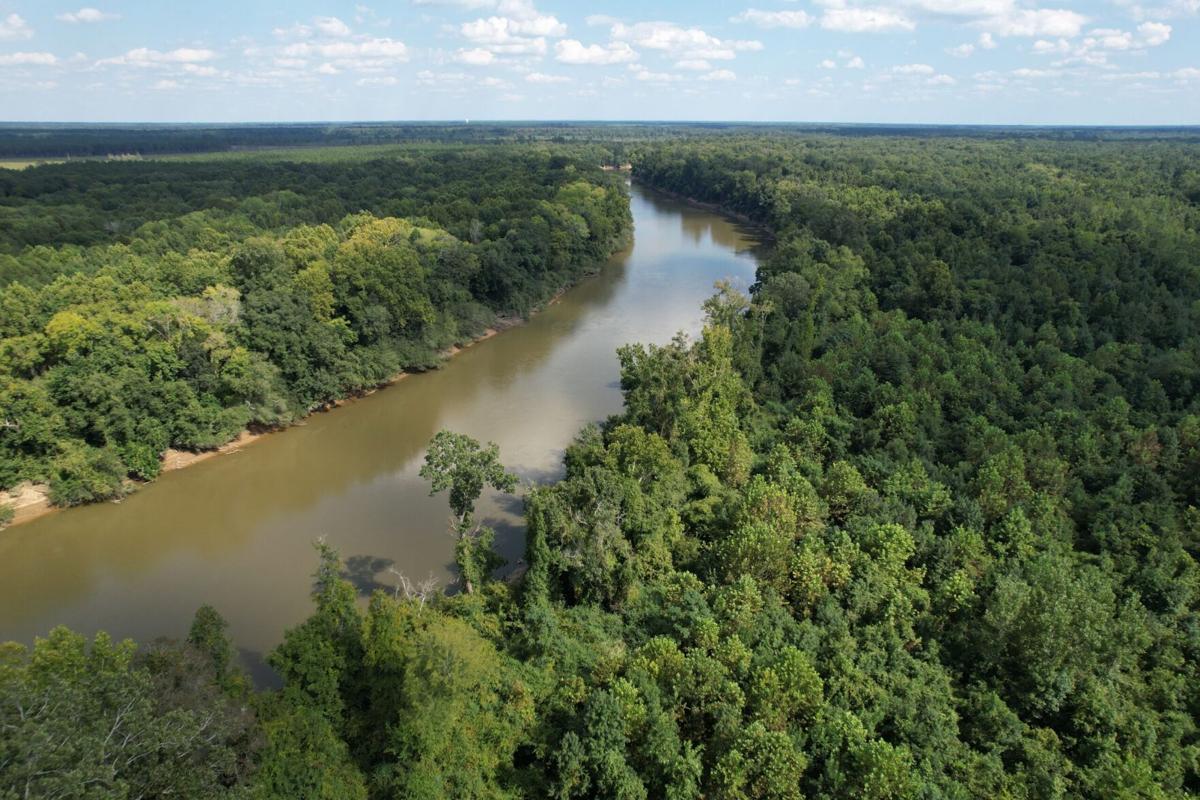
Francis Marion University has officially assumed ownership and stewardship of the expansive Duck Ponds property, an 8,355-acre tract along the Great Pee Dee River that will serve as a living laboratory for education, research, conservation, and recreation for generations to come.
The property, known locally as Duck Ponds, stretches along more than eight miles of Great Pee Dee River frontage from the U.S. Highway 301 bridge north to the Wachovia Hills area. The tract encompasses extensive bottomland hardwood forests, wetlands, and frontage along several tributaries, including Schoolhouse Branch, Black Creek, and Back Swamp. With the addition of Duck Ponds, Francis Marion’s total land holdings now approach 9,300 acres, making FMU one of the largest university campuses in South Carolina.
“This is a remarkable tract of land and an extraordinary addition to the university,” said FMU President Fred Carter. “Duck Ponds will serve as a living laboratory for students, faculty, and the community. It will complement our existing Freshwater Ecology Center by offering more extensive opportunities for fieldwork, research, and recreation along one of the most beautiful stretches of the Pee Dee River.”
People are also reading…
“We will use this property as an instructional site for forestry, environmental science, and environmental studies programs,” Carter said. “Hopefully, this project and similar efforts will inspire the next generation of forestry, conservation, and ecology leaders.”
More than 7,500 acres of the tract consist of bottomland hardwood forest, creating a natural resource for studying forest ecology, watershed management, wildlife habitat, conservation, resilience to environmental change and natural hazards, and sustainable land management practices. The property’s significant wetlands and riverfront ecosystems provide opportunities for hands-on learning and scientific discovery that are rarely available on such a scale.
Faculty members across FMU’s biology, environmental science, and forestry programs are already exploring the possibilities the property presents for student research, community engagement, and regional partnerships.
The acquisition was made possible through a coalition of public and private partners, including the South Carolina Conservation Bank, South Carolina Office of Resilience, South Carolina Department of Natural Resources, Florence County, Open Space Institute, and the Darla Moore Foundation. The project also reflects the continued commitment of Governor Henry McMaster and the South Carolina Forestry Commission to conservation, sustainable forest management, outdoor recreation, and the preservation of South Carolina’s natural resources.
As the university begins the process of managing and studying the property, Duck Ponds is expected to become one of the most significant educational and conservation assets in the Pee Dee region, strengthening Francis Marion University’s role as a leader in environmental stewardship, scientific research, and experiential learning.