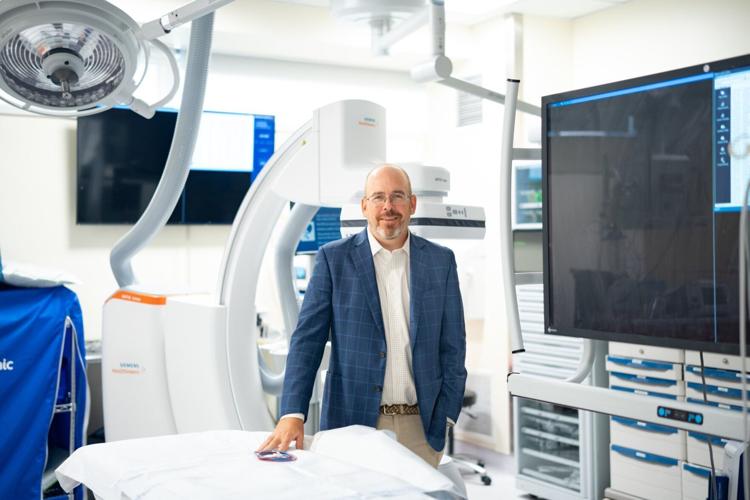
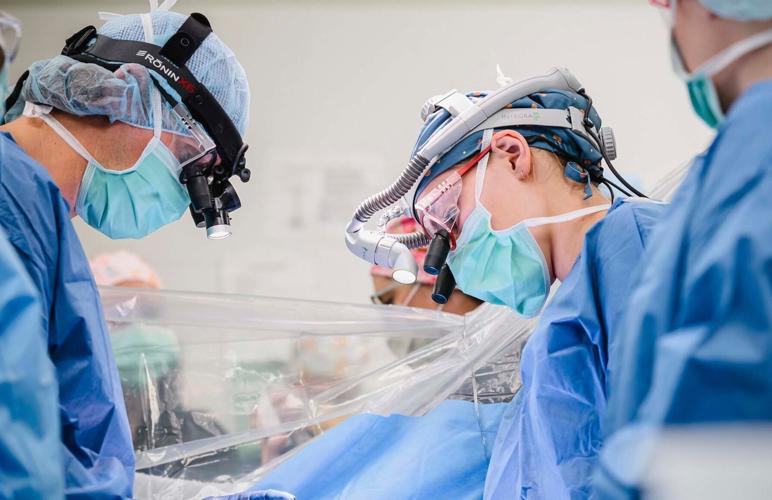
The Medical University of South Carolina has joined what the American Heart Association calls “top institutions across the country” in a research network designed to “transform heart transplant care.”
“One of the major unmet needs in the field is not just how we prevent rejection of transplanted hearts – we’re pretty good at that now – but also how we find the right balance between rejection and infection, avoiding some of the long-term consequences of being on rejection medications?” he said.
The 15-center research network, which includes Cedars-Sinai Medical Center, Columbia University, Johns Hopkins University School of Medicine, Mayo Clinic and Stanford University, will tackle those questions and many others.
For example: “How do we continue to optimize donor availability?” Tedford continued. “We’ve seen, probably for the first time in a long time, that there are fewer donor hearts available. Nobody really knows why that is. It may be related to a reduction in fentanyl overdoses,” he said.
“But last year, we saw about a 25% reduction nationwide in heart donors. Prior to that, we were seeing an increase based on utilization of hearts that we had not previously seen. We need to look at new strategies.”
Multi-center might
Those strategies may be easier to come by with input from the network’s multiple centers, according to cardiologist Brian Houston, M.D. He specializes in heart failure and transplant at MUSC Health.
“I think this is a really galvanizing way to move the field forward. Some of this goes toward structural difficulties in heart transplant in general, even in very busy programs like ours. We are routinely in the top 10 by volume in the nation. I think last year, we did around 70 heart transplants,” Houston said.
This content is sourced from
MUSC Health
. It reflects the author's views and has not been edited by our newsroom. It may have been generated using AI assistance.