




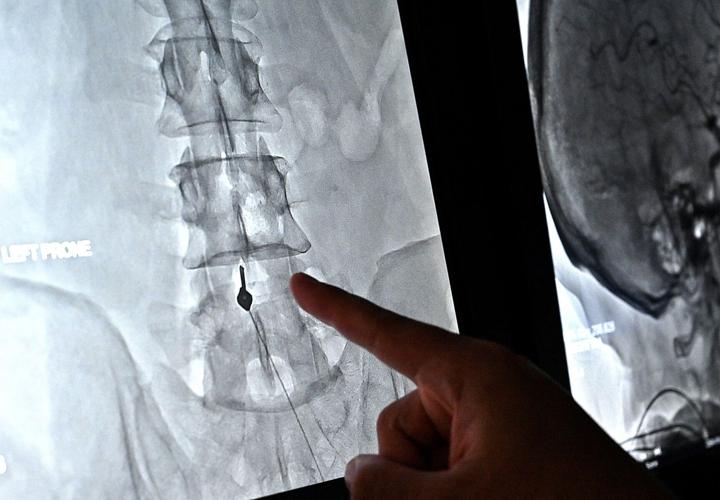
"And then the second step is to send patients for a lumbar puncture," also known as a spinal tap, Norat said. "And ideally, you want to remove a high volume of spinal fluid. That can temporarily mimic what a shunt would do, helping doctors see whether symptoms improve." A shunt is a surgically implanted tube that drains excess cerebrospinal fluid into the belly.
They and their loved ones then try to judge whether the symptoms improved, which is subjective. Another problem is that by the time patients return to the doctor’s office, they are back to where they started in terms of symptom improvement.
Adding direct analysis to the process
"But we have a new process that mitigates that problem," Norat said. "We do a very direct analysis of the patient."
The neurologist now does what is called a MOCA test – short for Montreal Cognitive Assessment. It measures mild cognitive impairment. "The patient receives a score based on points they got for correct answers," Norat said.
People are also reading…
Then the patient goes to the hospital, where a physical therapist does walking tests that also generate scores. And Norat removes spinal fluid several times a day to understand what may be happening, draining it through a temporary catheter in the back. The results simulate the effect that permanent surgery might have.
The patient stays in the hospital for two days. Then they redo all the tests and rescore the patient. If they see enough improvement, they may talk with the patient about getting a shunt, which would be adjustable in terms of how much fluid it drains.
"With a shunt, we normally start with a certain pressure of fluid drainage. If the patient says, 'I'm not improving,' we can change the pressure, and we can drain more or less fluid. So we can just find that sweet spot where they have improvements and but don't develop complications with overdraining," Norat said.


